
RESOURCES
Practical camera placement planning for residential and commercial properties.
Serving South Florida | Broward • Palm Beach • Miami-Dade
Start with questions
Most placement conversations start with hardware: which camera, how many, where it gets mounted. On residential and commercial properties across South Florida, we start somewhere else — with the moments you would want to look back on later. Who arrives, and from where? Where do packages, deliveries, and vendors land? Which corners stay quiet at night, and which ones get busy? Answer those first and good placement usually follows.
This page walks through how we plan placement. It is not a product list, and it will not give you a number of cameras — that depends entirely on the property and how it is used.
The right camera count depends on the property’s approaches, transitions, coverage areas, and the overlap needed between views.
We often start with transitions: the driveway entrance, the spot where a walkway meets the front door, the side gate line, the curb where a delivery van stops, or the lot entry on a commercial site. These are the places where someone crosses from outside the property to inside it, or from one area to another.
A camera aimed at a wide view can leave too much of the frame unused. We place cameras where people and vehicles naturally pass, with the height and angle set for the movement we need to capture. We walk those paths before we suggest any placement.
Light and conditions
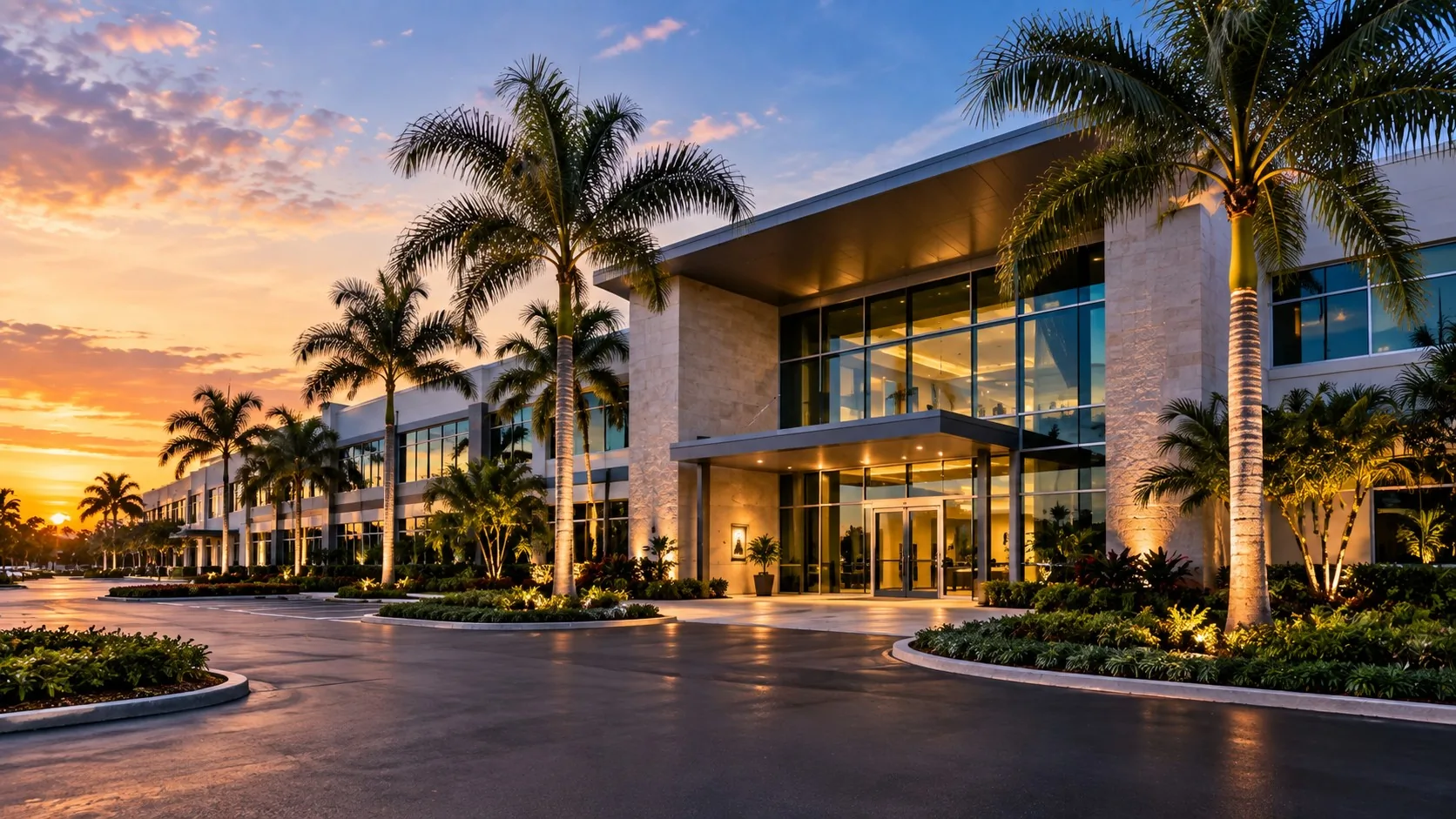
Midday glare off pale driveways and white walls, palms and hedges that grow into a view, summer rain, and evening lighting all change what a camera can usefully capture. A placement that looks right in the morning can face straight into the sun by late afternoon, or lose an entry behind new growth a season later.
We plan for the whole day: where the sun sits, where landscape and porch lighting falls after dark, and where planting is likely to be in a few months. For more on daylight and night approaches, see daylight driveways & night approaches.
For how glare, headlights, and low light can affect footage, see night and glare.
Day and night approaches →Recording is only half of it. At some point someone will want to find a short stretch of footage quickly and understand it. That shapes placement: views that overlap at key transitions, framing that keeps the important part of the scene in view, and intelligent-video alerts focused on the areas that matter.
When conversations turn toward documenting an incident for insurance or review, see insurance and incident conversations — documentation and footage review only; no claim outcomes promised.
Placement and alerts go together. Here is how intelligent video alerts use zones and schedules.
On residential properties, placement usually centers on the driveway, the front walk, the package drop, side yards, and evening arrivals — with care for privacy inside the home and toward neighbors. See intelligent video for residential properties.
On commercial properties, it tends to center on the entrances customers and staff actually use, parking, deliveries and vendor arrival areas, and the quiet stretch after hours. With people coming and going all day, placement should be clear and respectful of shared spaces. See after-hours intelligent video for commercial properties. For commercial properties built around gatherings, such as houses of worship and private schools, see intelligent video for commercial properties where people gather.
Either way, the underlying process is the same one we use across South Florida: understand the site, then design intelligent video around it. For the full process, see how we design security around your property. Already have cameras in place? See how we evaluate the current setup and plan changes around your property.
For the back of a home, including side gates, pools, and privacy toward neighbors, see planning views for back yards and covered patios.
For storefronts, rear doors, and loading areas, see retail storefronts after hours.
Associations and multi-unit properties can also read about cameras for HOA and multi-unit common areas.
Office and professional building owners can also read about cameras for office and professional buildings.
If you are building or renovating, see planning cameras in new construction and renovation.
Tell us how people and vehicles move across your property, what is not working today, and where you have wished for a better view. We will walk the site with that in mind and suggest placement from there.
Contact us to request a quote — Sales 954-667-9594 for new projects, Service 954-408-2918 for existing customers — or explore Solutions.
Request a quote →Your property is unique. Your security should be too.
Security designed around your property — for residential and commercial properties across South Florida.